
petroleum minister has announced that fuel prices would not be hiked and talks with allies on the issue were on.

Petrol prices on Thursday crossed Rs 73 a litre mark, the highest level since the BJP government came to power in 2014, while diesel touched a record high of Rs 64.11 a litre.

This will compete with Ford Ecosport petrol
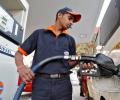
Global oil prices have slumped and India has access to larger amounts of discounted Russian crude oil, yet refiners are not passing on their savings to consumers

One litre of petrol now costs Rs 64.76 while the diesel price is Rs 54.70 a litre in Delhi
Petrol price was hiked by Rs 1.50 a litre and diesel by 45 paisa a litre.

Jet fuel or ATF price on Tuesday was hiked by a steep 8.5 per cent - the second increase in a month, while commercial cooking gas rate was cut by Rs 100 per cylinder in line with divergent trends in international benchmarks. Aviation turbine fuel (ATF) price was increased by 7,728.38 per kilolitre, or 8.5 per cent, in the national capital to Rs 98,508.26 per kl, according to a price notification of state-owned fuel retailers. Rates, which vary from state to state depending on the incidence of local sales tax or VAT, have been increased on firming up of global rates that followed four months of decline.
The government is mulling a marginal hike in petrol and diesel price along with an excise duty cut on auto fuels to cut the Rs 7,840 crore (Rs 78.40 billion) loss public sector oil firms are incurring every month on selling fuel below cost.
Speaking to mediapersons in Lucknow, he said, "There is no mechanism with the central government to curb the rising price of vegetables including onion; that can be done by the state governments."
State-run fuel retailers are losing about Rs 135 crore (Rs 1.35 billion) per day on sale of petrol, diesel, LPG and kerosene and the government is looking at proposals to make up for these losses, a senior official said.

The limited availability of flexible (flex)-fuel vehicles in the Indian market and the slow rollout of ethanol-blended petrol by oil-marketing companies (OMCs) remain major obstacles to achieving widespread use of biofuels in the transportation sector in India. Recently, two Union ministers have emphasised India's biofuel potential, arguing that it has the capacity and potential to lead a transition towards widespread biofuel adoption. Road Transport Minister Nitin Gadkari signalled that this transition is well underway and urged car manufacturers to quickly adapt and introduce new biofuel-run vehicles, lest the government resort to taxing diesel vehicles.
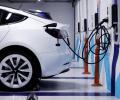
India's electric vehicle (EV) industry hit a new milestone in 2024, with sales surging 26.5 per cent year-on-year to 1.94 million units as of December 29, according to Vahan data from the Ministry of Road Transport and Highways (MoRTH).

With global crude oil prices climbing to their highest level in two-and-a-half years, Oil Minister S Jaipal Reddy on Friday said a ministerial panel will take a call on raising petrol and diesel prices.
TMC MPs were told about the problem in running an economy of India's size and the problems of public finance.
Petroleum minister Mani Shankar Aiyar on Wednesday ruled out hiking petrol and diesel prices in step with the firming up of international oil prices and the increase in excise duties.

Facing all-round criticism for a steep hike of Rs 1.80 a litre in petrol price, state-owned oil companies on Friday said they will roll back the increase in rate if the government gives a directive to that effect.

India, the world's third largest oil consuming and importing nation, bought crude oil worth 49 billion euros from Russia in the third year of Moscow's invasion of Ukraine, a global think tank said. India, which has traditionally sourced its oil from the Middle East, began importing a large volume of oil from Russia soon after the invasion of Ukraine in February 2022.

This trend is likely to gain pace with the new infrastructure cess on diesel vehicles.

Faced with the prospect of revenue loss on fuel jumping to Rs 700 billion (Rs 70,000 crore) next fiscal, Petroleum Ministry on Wednesday called for "harsh decisions" even as it hinted that cleaner Euro-IV fuel in 13 metro cities will cost more from April 1.
The government on Friday decontrolled petroleum prices to bring fuel costs in line with global oil rates after an Empowered Group of Ministers, headed by Finance Minister Pranab Mukherjee, met for the second time in less than three weeks to decide on raising fuel prices. Railway Minister Mamata Banerjee was absent again.
International crude oil prices may have eased but the government has no immediate plans to pass on the benefit to the consumers, as it wants to wait for the prices to stabilise further.
.jpg)
State-owned oil firms are likely to announce reduction in rates, made possible because of softening in international oil rates, this evening, government and industry sources said.
According to reports, the price of petrol is expected to go up by Rs 5 and diesel by Rs 6.
Attributing the steep hike in petrol prices to declining value of rupee, Planning Commission on Wednesday said it will have immediate impact on the price situation but things will stabilise in the long run.

Petrol price was freed from government control in June 2010 but public sector companies continue to informally consult their parent Oil Ministry before taking a decision.
The Planning Commission said the decision of oil marketing companies to raise petrol price by Rs 3.14 per litre is a good news and will provide credibility to the economic reforms process.
Prime Minister Manmohan Singh on Saturday hinted at replacing the current practice of fortnightly revision of petrol and diesel prices with a more stable pricing policy once the volatile international crude prices stabilise.
The VW cars are well known in the country's car market for having sturdy body structures, which are combined with powerful fuel efficient engines and abundant comfort and safety features.
Petrol and diesel prices are unlikely to be reduced in line with falling international prices as the government is working on a stable pricing regime.
The Cabinet Committee for Economic Affairs is expected to meet on Wednesday evening to take this decision, given the cheap crude prices in the global market. The government had last cut petrol prices on December by Rs 5, and diesel rates by Rs 2 a litre.
International oil prices have hit a six-month low, helping Indian fuel retailers breakeven on petrol but they continue to lose money on diesel - the most used fuel in the country, officials said. The world's best-known crude benchmark, Brent was trading at $94.91 per barrel on Thursday after concerns of a global recession led to it slipping to a six-month low of $91.51 on the previous day. The current rates are a relief to India, which is 85 per cent dependent on imports for meeting its oil needs.
In first clear indications of a further reduction in petrol and diesel prices, Petroleum Minister Murli Deora on Monday said the government was considering passing on the benefit of the fall in international crude oil prices to consumers.
While consumers feel that petrol pinches directly, diesel hurts indirectly, as it is an input in almost all the goods and services we use.

"There is no immediate plan to decontrol diesel or LPG as they have cascading effect (on general prices)," Minister of State for Petroleum and Natural Gas R P N Singh told reporters in New Delhi.
Thirteen big cities, including Delhi, Mumbai, Kolkata, Chennai, Hyderabad, Bangalore, Lucknow, Kanpur, Agra, Surat, Ahmedabad, Pune and Sholapur will move from Euro-III grade fuel to Euro-IV from Thursday.
Faced with huge under-recoveries, Indian Oil Corporation on Saturday sought an immediate upward revision of petrol and diesel prices to the the extent of Rs 10.50 paise per litre.
A formal announcement is likely in Parliament on Wednesday. This will reverse half of the price hike in June, when petrol price was increased by Rs 4 and diesel by Rs 2.

Congress said ATF prices have been reduced by 31% while petrol only 16%.
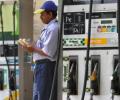
Facing difficulties in daily operations due to constant increase of fuel prices by oil marketing companies, the Consortium of Indian Petroleum Dealers' Association have threatened to go on a one-day strike.
Government may raise petrol price by Rs 2 a litre and diesel by Re 1 a litre this week, but a duty rejig to minimise impact of high international crude oil prices looks unlikely. The decision on this will be taken by the Cabinet headed by Prime Minister Manmohan Singh.
